
Falling shorebirds: what do the numbers tell us?

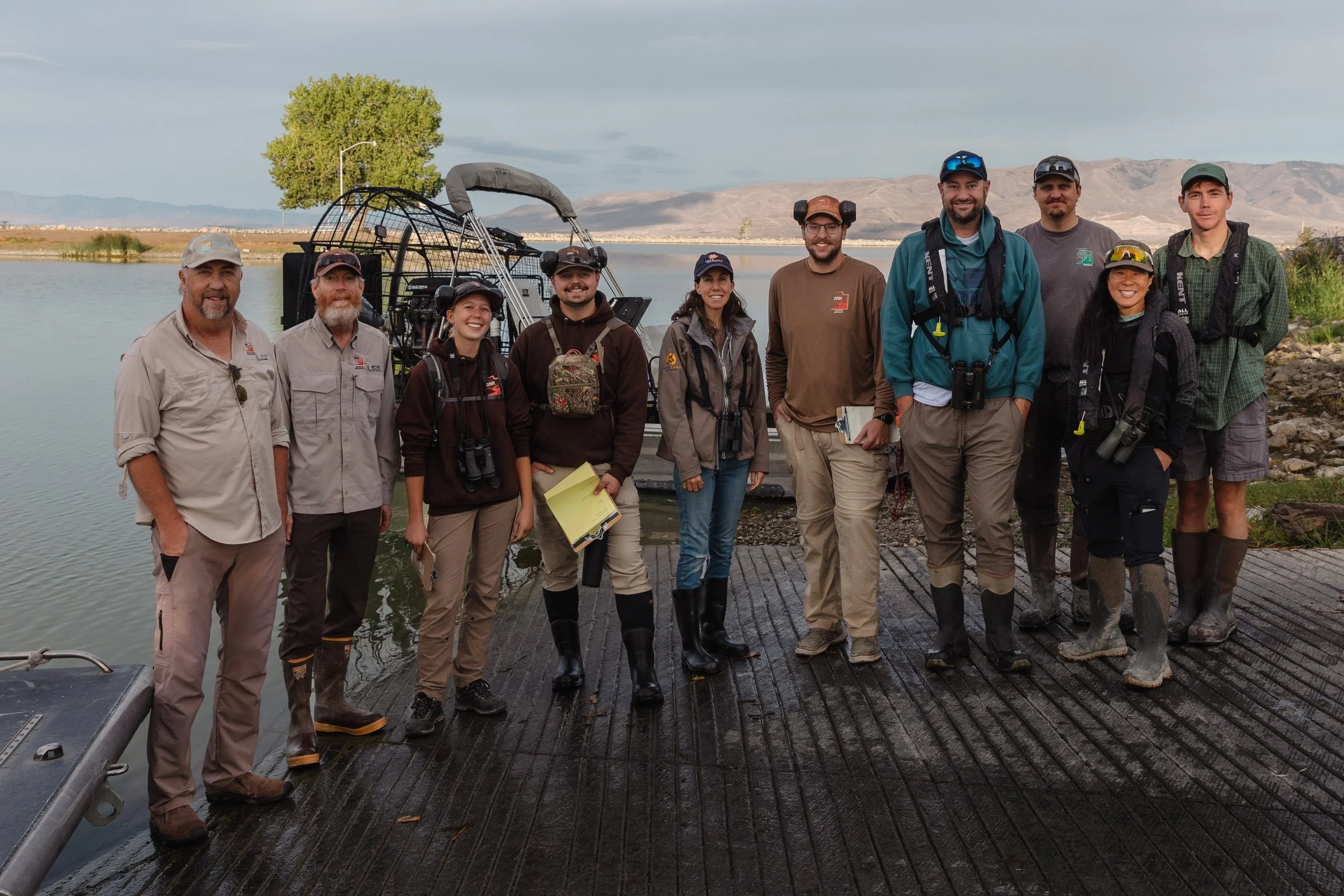


Salt Lake City, UT– Bells ring out around the office of Sageland Collaborative amidst stacks of datasheets and maps of Great Salt Lake. Each ring of the bell is someone celebrating a count of 1,000 shorebirds or more being entered into a sprawling Excel sheet. Within each column, tallies of shorebird numbers are listed beside names of wetland sites throughout Utah and along the Great Salt Lake– a culmination of data gathered by volunteers and scientists. The week prior, teams had ventured out as part of the Intermountain West Shorebird Survey, a collaborative effort across 11 states to replicate censuses of the past to better understand changes in shorebird populations over time.
Data collected from these efforts has been analyzed by Sharon Montecino, a master’s student from Utah State University. Despite the seemingly large numbers of shorebirds that populate this year’s spreadsheet, Sharon’s analysis demonstrated that “shorebirds [during migration periods in the Intermountain West] declined by 36% in fall and 53% in spring between 1994-1995 and 2022-2025, with more than three-quarters of the 160 evaluated sites holding significantly fewer individuals”. Overall, there are significantly less shorebirds on the landscape than 30 years ago.
Sharon’s thesis and the clear connection between disappearing wetlands and declining shorebirds draws upon years of data gathered from volunteer survey efforts led by Sageland Collaborative along with our partners at National Audubon Society, Utah Division of Wildlife Resources, Utah Division of Forestry, Fire, and State Lands, Tracy Aviary, Point Blue Conservation Science, and the U.S. Fish and Wildlife Service. As the fall migration in Salt Lake City winds down, our scientists wonder about how many shorebirds we will count come spring.
###
Expert quotes on significance of the project:
“The Intermountain West Shorebird Survey is putting data behind what birders and scientists have witnessed firsthand: shorebirds are declining at alarming rates. The Great Salt Lake and its surrounding wetlands are a lifeline for these remarkable birds, but with lake levels hovering near historic lows and no concrete plan to bring more water to the lake, that lifeline is at risk. We are deeply concerned about the future of these incredible species.”
–Emm Clark, Sageland Collaborative Avian Ecologist
###
About Sageland Collaborative
For three decades, Sageland Collaborative has provided science-based strategies for wildlife and land conservation. Our approach to conservation is through our partnerships, putting science into action, and basing our work in community. Together, we build on our shared values for wildlife and the land, we celebrate the wins, and we find joy in our work together. Our conservation goals focus on increasing biodiversity, ensuring wildlife can move freely across the landscape, and restoring habitats.
###
For Immediate Release
3 September 2026
Contact:
Emm Clark
Sageland Collaborative
emily@sagelandcollaborative.org