Coexisting with wildlife on Wednesday's Access Utah
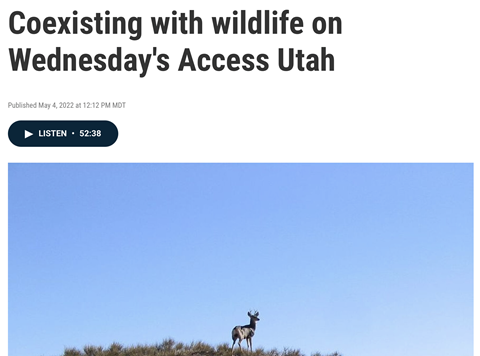
We're excited that Utah Public Radio recently hosted Wasatch Wildlife Watch project lead Austin Green. Austin discusses a recent study based on the project, all about how human influence is altering the behavior of several species in northern Utah. Listen to the story here.
Read the paper, published in Conservation Science and Practice, to learn more about effects of human development, environmental factors, and a highway on our Wasatch wildlife. This information is crucial to successful conservation and mindful development. And it's all thanks to our amazing Wasatch Wildlife Volunteers and donors, project leads Austin Green and Mary Pendergast, and our many partners. Thank you!
Read More
Finding the Black Rosy-Finch - UPR's Wild About Utah
High in the snow-covered mountains of Northern Utah, Kim Savides, a graduate student in the Department of Wildland Resources at Utah State University waits for the daily avalanche report during winter months. If favorable, she ventures out to remote bird feeders in hopes of finding black rosy-finches.
The finches thrive in bad weather. When it’s a clear, sunny day Savides knows her likelihood of seeing a finch is slim. But on nasty, snowy, windy days she can count on seeing hundreds of the finches around the feeders…
Read More
Biologists ‘Blitz’ Lake Powell, Study Wildlife Restoration as Water Recedes
What Glen Canyon once was, is slowly starting to come back. At Lake Powell’s high water mark, which hasn’t been under water in over 20 years, dozens of plants, insects and wildlife have been gradually settling back in.
“Because of continued demand for water, for Colorado River water, and climate change as well, we’ve had a two-decade-long shortage on the river system,” Eric Balken, director of the Glen Canyon institute explained. “These canyons that were once filled by the reservoir, they’re now out of water, and there’s a big question as to how those canyons are restoring.”
Read More
This Green Earth
During the first half of the show, Nell and Chris learned about the Wasatch Wildlife Watch, a massive citizen science effort using camera traps to gather data about wildlife in the Wasatch Front and how they are impacted by humans. Dr. Mary Pendergast from Wild Utah Project, and Austin Green with the University of Utah joined Chris and Nell to share the details and how listeners can get involved as volunteers.
Read More
Critter cams have produced thousands of images of wildlife roaming northern Utah’s mountain trails
Outdoor recreation and wildlife cohabit in a big way along the Central Wasatch Mountains and the foothills that tumble into Utah’s largest urban area, yet scientists have only a vague idea of how animals respond to all the athletes, picnickers and hikers traipsing through their living room.
Now biologist Austin Green hopes to find firm answers using dozens of trap cameras. But his research has generated more information than he and his team can handle: 50,000 critter images recorded during a 105-day study period last spring and summer.
Read More
Commentary: Citizen Scientists needed to study Wasatch wildlife
There has perhaps not been a more important time to hone our understanding of the current state of ecological health and function of the Wasatch Mountains and the wildlife that live here.
The Wasatch sustains 9 million visitors a year, which is about the same as that of the “mighty five” Utah national parks. Currently many planning processes and opportunities to shape the future of the central Wasatch are unfolding, ranging from the Central Wasatch National Conservation and Recreation Area legislation, transportation solutions from the recent blue print of the Central Wasatch Mountain Accord, and other national forest planning opportunities.
Read More
Conservationists balk as feds aim to expand hunting in Utah’s Bear River Bird Refuge
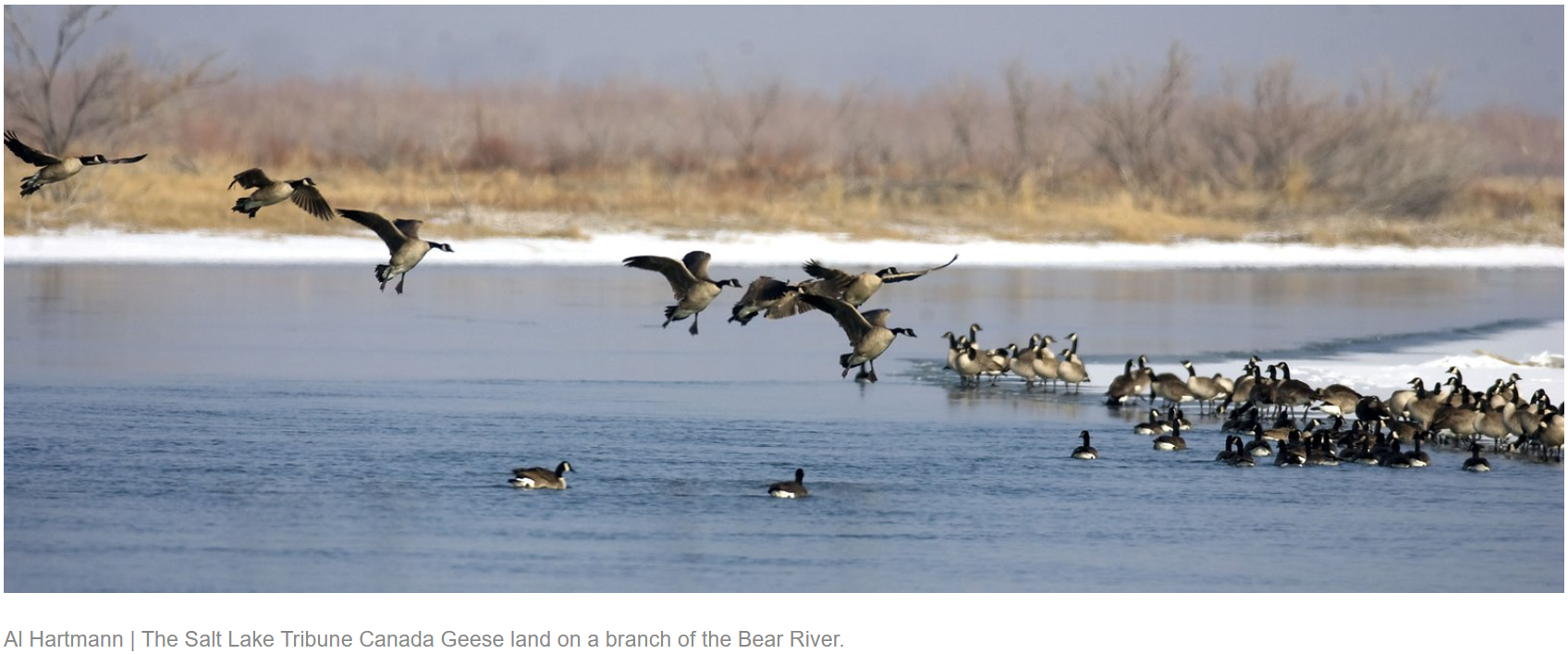
Federal officials are proposing to substantially expand hunting in Utah’s Bear River Migratory Bird Refuge as part of a wider effort to boost hunter access to the nation’s wildlife preserves and other public lands.
Some conservation groups are skeptical of the plan, outlined in a draft environmental assessment released last week by the U.S. Fish and Wildlife Service.
Read More
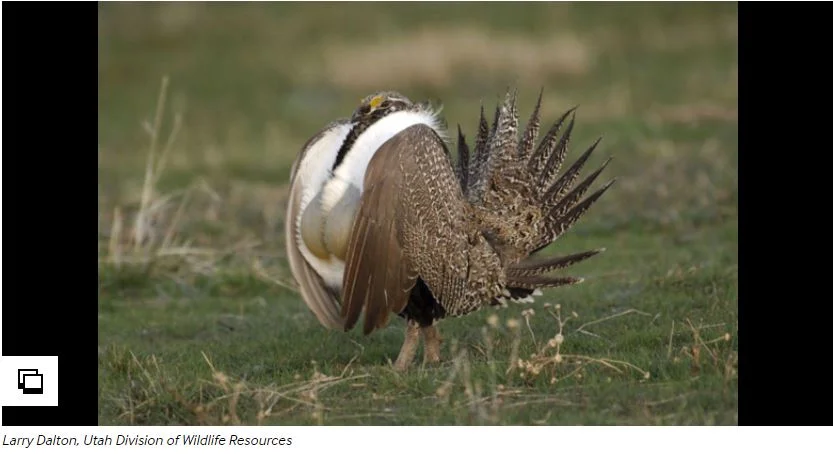
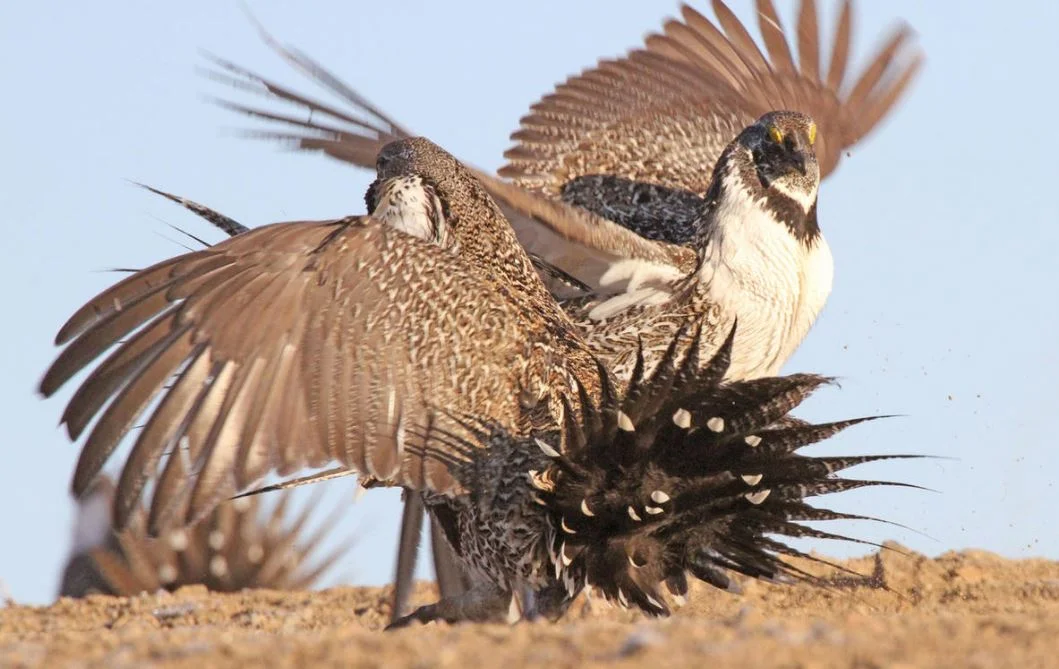
Sage grouse ecology isn’t just for the birds
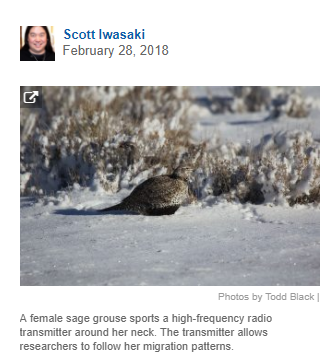
Although studies by various wildlife organizations have reported the greater sage grouse population has been in decline for the past 50 years, the U.S. Fish and Wildlife Service concluded in 2015 that the birds were warranted for protection under the U.S. Federal Endangered Species Act.
Read More
Op-ed: On the contrary, monuments are examples of multiple-use lands
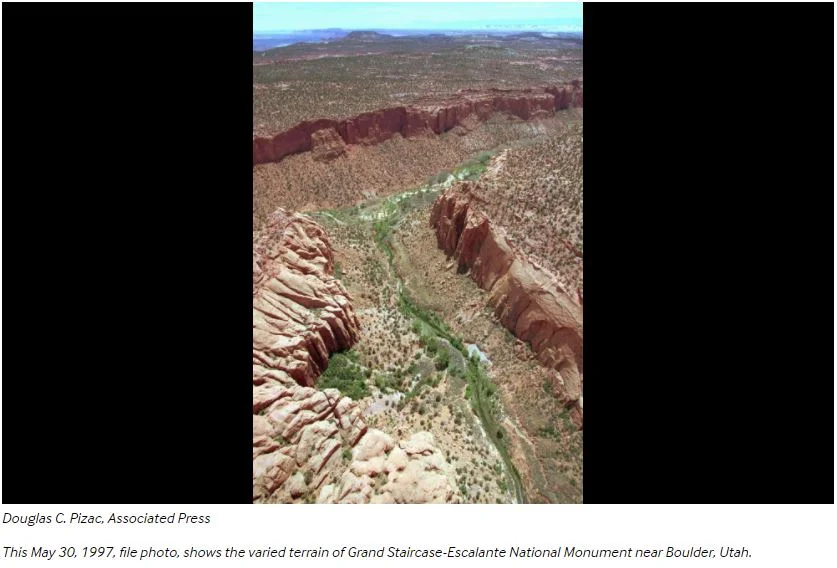
In his recent article, “The facts about multiple land use in Utah” (Nov. 26), Don Peay argues that national parks and monuments are, on balance, bad for wildlife and unfair to hunters. Thus, he welcomed President Trump to Utah to announce the shrinking of Bears Ears and Grand Staircase-Escalante national monuments. Let’s take a look at Peay’s alleged facts.
Read More
States urge revamp on sage grouse management
Leaders in Western states pressed their case in a congressional hearing Wednesday that management of the greater sage grouse is best carried out without federal interference.
"Federal land management agencies have made threats to the sage grouse worse," said Idaho Speaker of the House Scott Bedke, R-Twin Falls.
Bedke testified before the U.S. House Committee on Natural Resources, chaired by Rep. Rob Bishop, R-Utah, during an oversight hearing on "state-based management solutions" to protect and restore the birds' number.
Read More
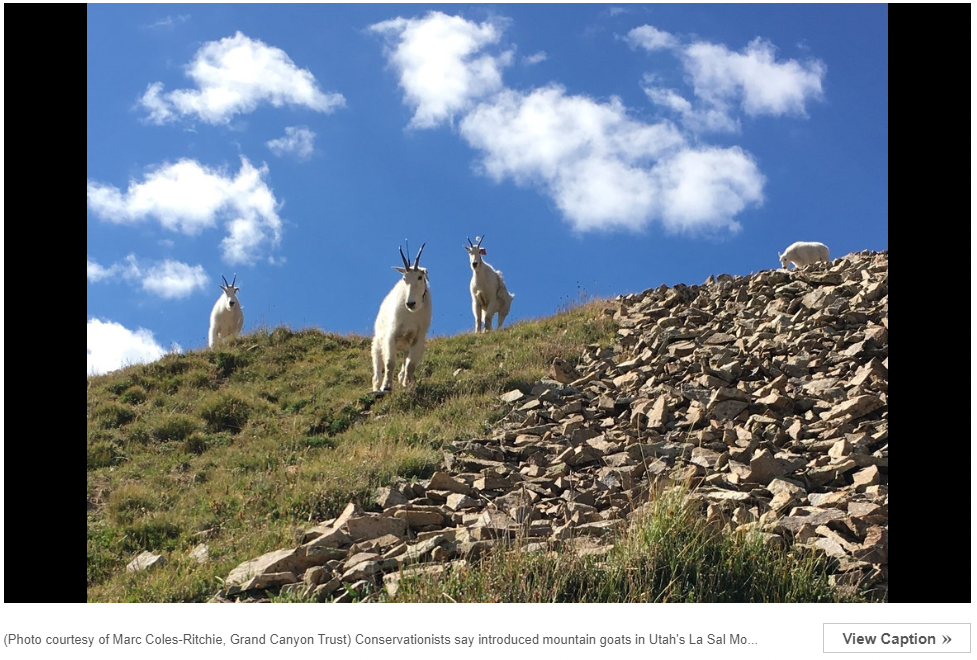
Utah wildlife officials want to put mountain goats where they haven’t been since the ice age
Conservationists complain the state is sacrificing alpine landscapes just to provide more opportunities for big game hunting. The La Sals are already showing signs where wallowing goats have exposed soils and left excrement and hair all around, according to researchers.
Read More
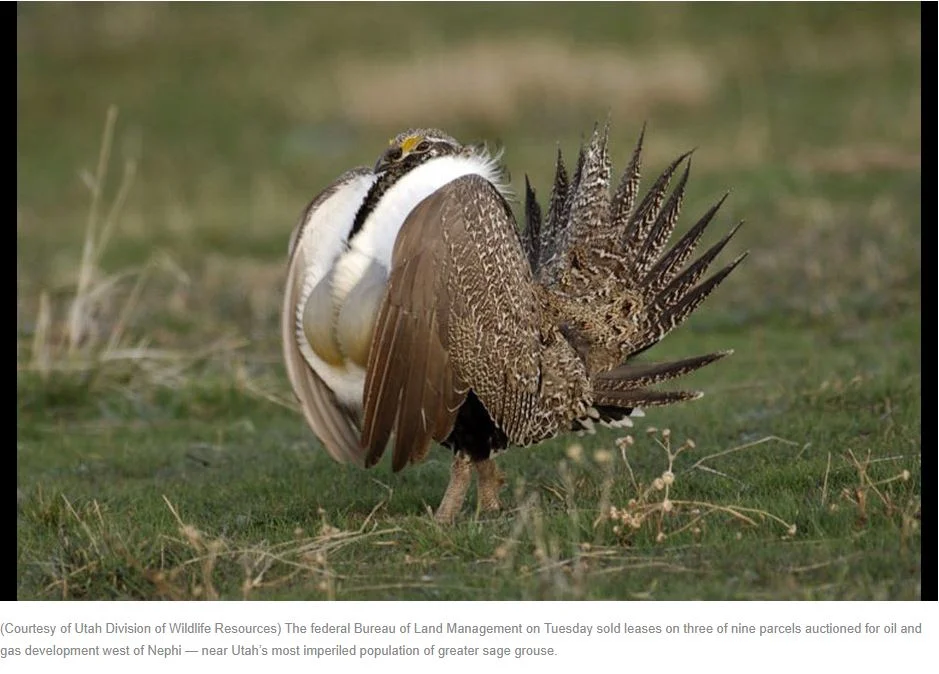
Feds get just $15K for auction of controversial oil and gas leases on sage grouse habitat
The Bureau of Land Management’s attempt on Tuesday to auction nine parcels in Utah’s West Desert for oil and gas development was a bust, with just three parcels attracting the minimum bid of $2 an acre, netting the federal agency a grand total of $14,837.
The auction, which targeted nearly 15,000 acres west of Nephi, was controversial because the lands are home to Utah’s most imperiled population of greater sage grouse. Four of the parcels overlapped “priority habitat management areas” outlined under the BLM’s sage grouse land-use plans, now under review by the Trump administration.
Read More
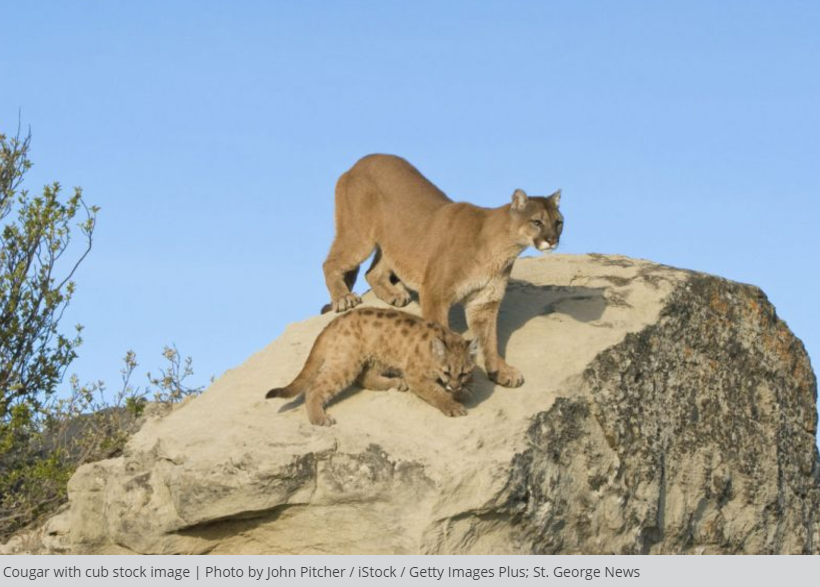
Despite varied opinions, Utah Wildlife Board votes to increase number of cougar hunting permits
ST. GEORGE — The Utah Wildlife Board voted Thursday to allow an additional 50 hunting permits for cougars to be issued in the upcoming 2017-18 hunting season.
The motion to increase the number of permits from 531 to 581, several of which include areas in Southern Utah, was approved unanimously in a public meeting in Salt Lake City by the board, which is composed of seven citizens appointed by the governor.
Read More
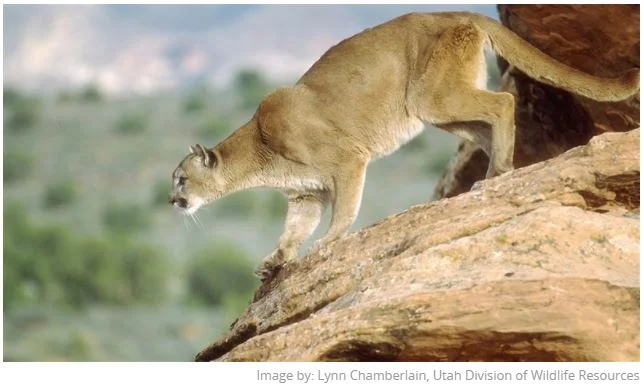
Utah Division of Wildlife again recommending bigger cougar hunt
Division staff will present their recommendations to the state wildlife board on Aug. 31. They’re suggesting 579 cougar hunting permits for the year, compared to 531 last year. The reason for the increase, state biologists say, is because cougar populations continue to grow. Wildlife advocates, however, say the state’s methods are flawed.
“We think since about 2004, (cougar populations) have probably been growing by about 3 percent per year,” said Darren DeBloois, game mammals program coordinator for DWR.
There are no firm estimates on how many mountain lions live in Utah, since the animals are elusive and hard to track. DWR models suggest numbers between 1,900 and 4,000 adult animals. Authorizing hunters to potentially take 14 percent to 30 percent of the cougar population is unconscionable, conservationists say.
“This is concerning to us as scientists,” said Allison Jones with the Wild Utah Project. “It’s concerning to wildlife lovers, cougar lovers and environmental activists.”
Read More
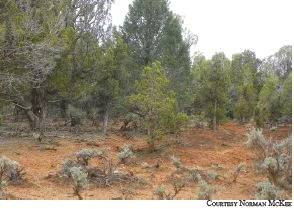
Skutumpah Terrace Restoration - Article by Scott Berry (WUP board chair) and Laura Welp - The Insider
Norm McKee’s recent op-ed in the Insider about the Skutumpah Terrace ecosystem restoration project (70,000 acres) in the Grand Staircase Escalante National Monument (GSENM) demonstrates how different parties, all committed to a scientific approach towards land management, can disagree about the application of conservation science to specific projects. The first step in doing good science is asking good questions, and it is at this point that McKee’s analysis goes astray...
This article was published in response to "Where is the Common Sense in Getting Things Done?" Op-Ed by Norm McKee, April 27, 2017.
Read More
BLM strikes right balance at Recapture Canyon - Letter to the editor Salt LakeTribune by Ronni Egan
The 12-year saga of the Recapture Canyon ATV trail has come to a long-awaited conclusion, barring appeal.
Over 11 miles of motorized trails along the rims of the canyon will remain open and have several improved staging areas and informational kiosks, providing ample recreational opportunities to local residents and visitors alike.
The canyon bottom will remain open to hiking, biking and horseback riding, but closed to motorized use, and the illegally constructed ATV trail, which the canyon has been reclaiming on its own in the past 10 years, will get more reclamation work, obliterating and revegetating portions along its length.
Read More
Sage grouse advocates raise concern over potential BLM oil leases
Activists say the Bureau of Land Management should not offer possible oil and gas development in central Utah where a sage grouse population is already suffering from significant population declines.
The federal agency announced it is taking public comment on an environmental analysis to possibly offer just shy of 15,000 acres in Juab County for potential oil and gas leasing.
Comments are being accepted on the proposal until May 1 by the federal agency, which could make changes to its plan based on input and review.
Read More
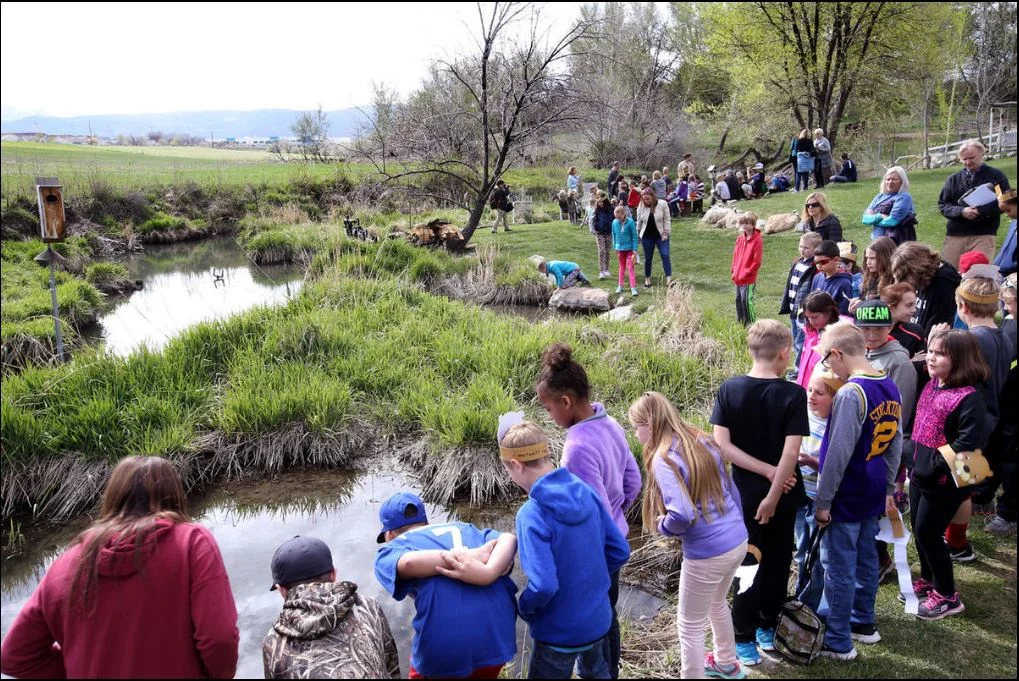
Draper homeowners fight to preserve backyard wetlands despite flood risks
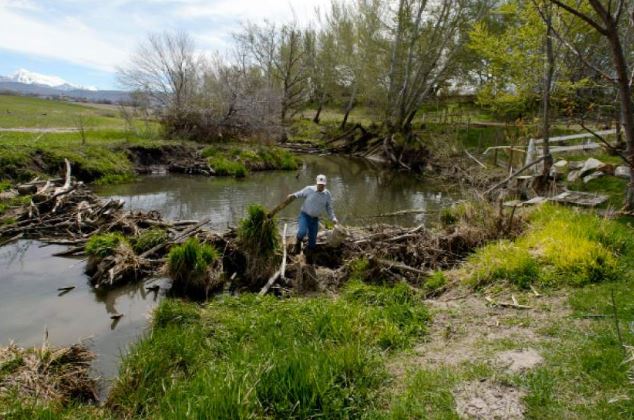
Allison Jones, director of the Wild Utah Project, said the flood threats by the dam were unproven, and instead argued that beaver dams helped to filter sediment out of the water and act as flood mitigators.
"If you are claiming that these 20-year-old dams are a flood control hazard, I would say 'prove it,'" Jones said.
She came out to the property to support the McAdams family and to teach fourth-grade students from Oakwood Elementary about the benefits of the natural dams.
Read More
Leave it to beaver? No way, says Salt Lake County -Salt Lake Tribune-
Beaver dams help control floods, slow water flows when they're high, connect water tables to floodplains and create wetlands and wildlife habitat, said conservation biologist Allison Jones.
"You have all these ecosystem services that keep the entire stream corridor functioning as it should," said Jones, with the Wild Utah Project. "Many other municipalities across the county are starting to allow beavers back to perform this critical engineering service."
Read More
Op-ed: BLM strikes right balance with Red Cliffs tortoise plan
Conservation is something we all can relate to — reserving our native "pantry," for its continued sustenance of our quality of life, for inspiration and for the future. Over the last couple of decades the BLM has often tried to mirror the efforts of a nation seeking the best way to utilize but also conserve its public environmental resources in the arid and also rapidly developing West. Look deeply enough and, as BLM St. George Field Office Manager Brian Tritle said, in these conservation lands you will find the reasons that make you want to live in the Southwest and keep living here. And it's not just the recreation and scenery … healthy watersheds, diverse native plants and animals, and cultural heritage define the richness of this place. At Red Cliffs, we can demonstrate that we care enough to conserve this legacy.
Read More